
The True Cost of Second-Hand Fashion in a Globalized World
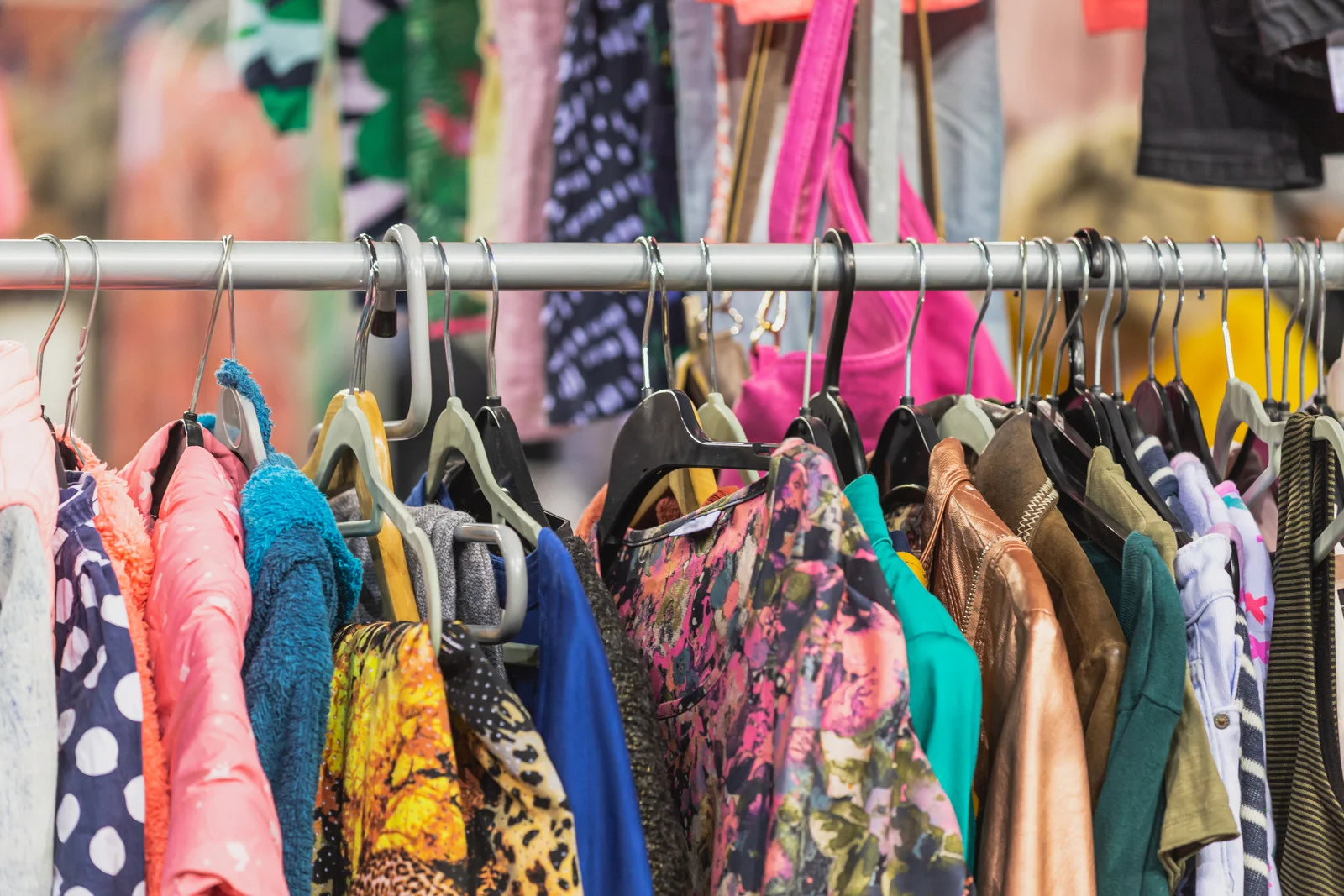
Have you ever wondered what happens to your clothes after you drop them off at a donation bin in charity shops? What if the shirt you donated last month did not end up in the wardrobe of someone in your community, but thousands of kilometres away on another continent? While we often hope for them to find a second home somewhere and believe this as a responsible and “green” choice to fast fashion, the reality is a bit more complicated. Every year, millions of second-hand garments from Europe and North America are exported to countries such as Ghana, Kenya, Ethiopia, Pakistan, Bangladesh, Chile, and Rwanda. Clothing from familiar brands like H&M, Levi’s, Tesco, and Primark fills bales shipped across the globe, creating a vast international trade in second-hand fashion.
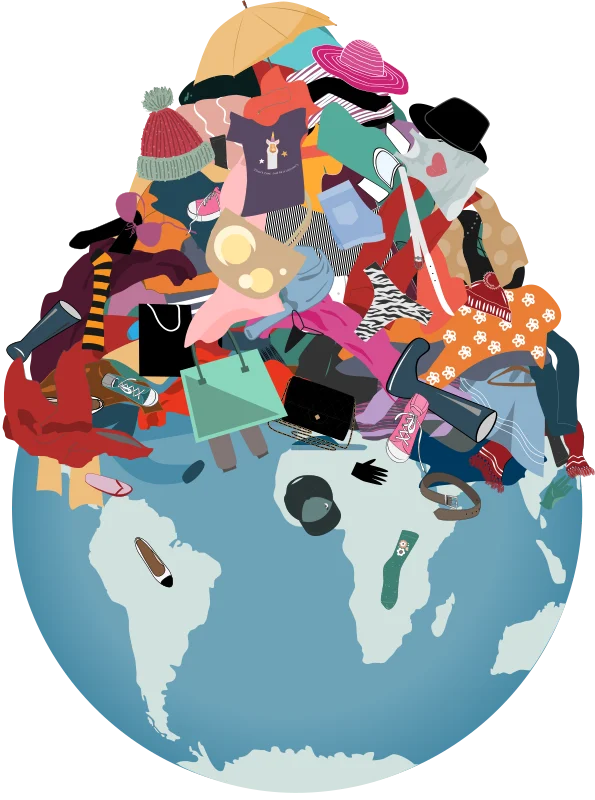
In Kenya, 40% of imported second-hand clothes , or ‘mitumba’, ends up as immediate waste. Concerns over the environmental and economic impacts of these imports have led some countries to take action. Rwanda, for example, banned second hand clothing in 2018 to protect local textile industries. In contrast, Ghana remains one of the world’s largest importers of second-hand clothing. In Chile, the Atacama Desert has become a dumping site for unsold fast fashion and second-hand clothing. A similar pattern can be observed in Pakistan and Bangladesh, countries that receive high amounts of clothing donations, much of which is sorted upon arrival. Lower-quality items often become waste and are dumped near waterways, contributing to severe environmental degradation.
In cities like Nairobi and Mombasa, discarded textiles are doing more than just taking up space. They are clogging urban drainage systems, which leads to severe flooding during the rainy seasons. This creates massive strain on infrastructure, damaging roads and sewers, and it is often the low-income communities that bear the heaviest burden of this environmental degradation. In Ghana, when the rains come in Kantamanto market, floodwater carries these garments into waterways, devastating aquatic life and the livelihoods of fishing communities along Accra’s coastline. It is the traders, the fishermen, and the residents of low-income neighbourhoods who bear the heaviest burden of waste that was never theirs to begin with. In districts like Mirpur in Bangladesh, thousands of workers, the majority of them women, sort through bales of foreign cast-offs daily, while what cannot be resold piles up in dumpsites or is burned, releasing toxic fumes into densely populated communities.
It is the workers and residents of these informal settlements who bear the heaviest burden of an industry that profits elsewhere and disposes of its consequences. In the port city of Iquique in Chile, discarded textiles are doing more than just taking up space. An estimated 39,000 tonnes of clothing are abandoned in the Atacama Desert every year, forming mountains of waste now visible from satellite imagery. Because most garments are made from synthetic materials, they will not biodegrade for centuries instead of breaking down into microplastics and leaching toxic chemicals into the soil of one of the world’s most fragile ecosystems. It is the land and communities of the Global Majority that bear the heaviest burden of a consumption cycle that begins and profits far away.
A Necessary Lifetime
In cities like Nairobi, Accra, Dhaka, and Iquique, the secondhand clothing trade is doing more than just filling market stalls. It is functioning as a vital economic engine for millions of people who depend on it daily. For families across East and West Africa, mitumba and its equivalents provide affordable clothing options that would otherwise be entirely out of reach. In Kenya alone, the mitumba trade supports thousands of traders, tailors, and transporters who have built entire livelihoods around the secondhand market and for many, it remains the only viable source of income . At Kantamanto Market in Accra, over 30,000 traders earn their livelihoods sorting, selling, repairing, and upcycling imported garments, the majority of them women. In Dhaka’s Mirpur district, thousands more again predominantly women spend their days sorting through imported textile waste, turning what arrives in bales into a functioning informal economy that sustains entire families. Even in Chile, where the Atacama Desert has become a visible symbol of textile waste at its worst, the port city of Iquique has long served as a regional distribution hub for secondhand clothing across Latin America providing affordable garments to communities throughout the continent who depend on it as much as those in Africa and Asia do.
The second-hand trade, in this sense, is not a problem unique to one region. It is a global system of interdependence, one that stretches from donation bins in Europe and North America all the way to the market stalls, sorting houses, and shorelines of the Global Majority. The challenge is not the trade itself. It is the surplus of low-quality, unsellable items that markets simply cannot absorb, and the absence of systems local or global to manage what is left behind. Finding a way to preserve the economic lifeline while addressing the waste it generates is critical.
Reuse is a Global Powerhouse
The good news is that secondhand shops are already a significant part of the solution and the data makes a compelling case. In Germany alone, approximately one million tonnes of textile waste are generated every year, yet many of those garments still have up to 70% of their usable life remaining at the point of disposal. This means that the problem is not the clothes themselves, it is how quickly and carelessly we discard them. Consider what reuse actually achieves: for every ten secondhand items sold, six directly prevent the production of a brand-new garment, reducing demand for the water, energy, and raw materials that new clothing requires. Even with a local resale rate of just 2–4% the current rate in Germany has measurable system-wide effects by diverting usable clothing from waste streams and reducing pressure on disposal systems. Scaled globally, even modest increases in reuse rates would translate into millions of tonnes of waste prevented, and millions of communities spared the consequences of textile pollution.
4 Ways to Make Your Clothes "Give" Again
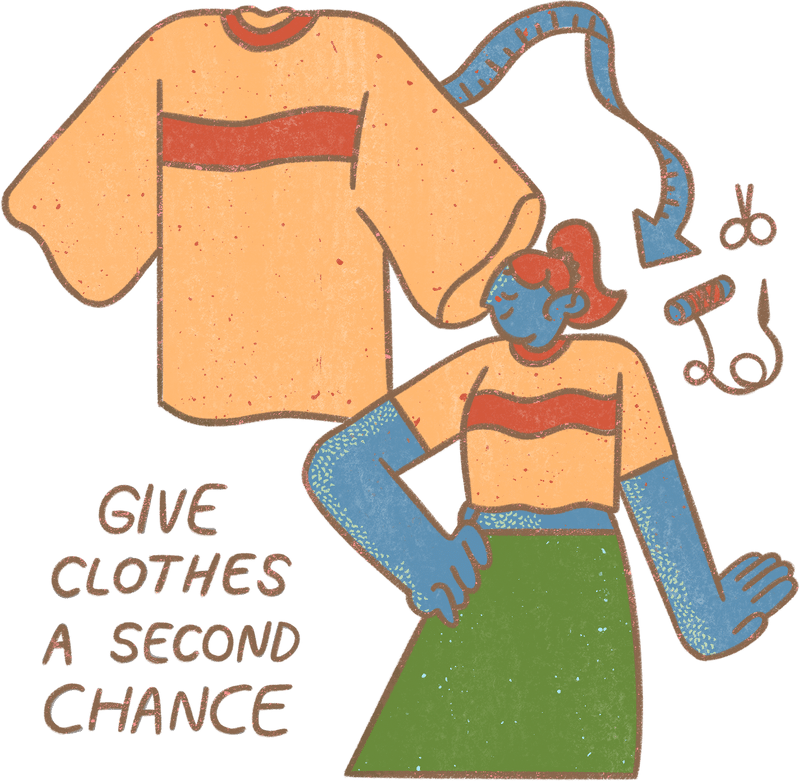
Before you discard a piece that feels a little tired, consider this: the clothes already in your wardrobe are part of a global system. Every item extended is one less item entering an already overwhelmed waste stream, one less garment potentially ending up in a drainage system in Nairobi, on a beach in Accra, or in a desert in Chile. Here are four ways to give your clothes a longer life:
1. Layer Strategically: combining pieces you already own creates entirely new looks without spending a cent. Layering is one of the simplest ways to extend the perceived life of a wardrobe and delay the impulse to discard.
2. Tailor for Fit: a small alteration of a hem, a resize, a tuck can make an old item feel custom-made and brand new. Tailoring is also a direct way to support the thousands of skilled tailors whose livelihoods depend on the secondhand trade.
3. Accessorize: the same outfit can move from casual to chic with a change of accessories no new purchase required. What feels dated is often simply unstyled.
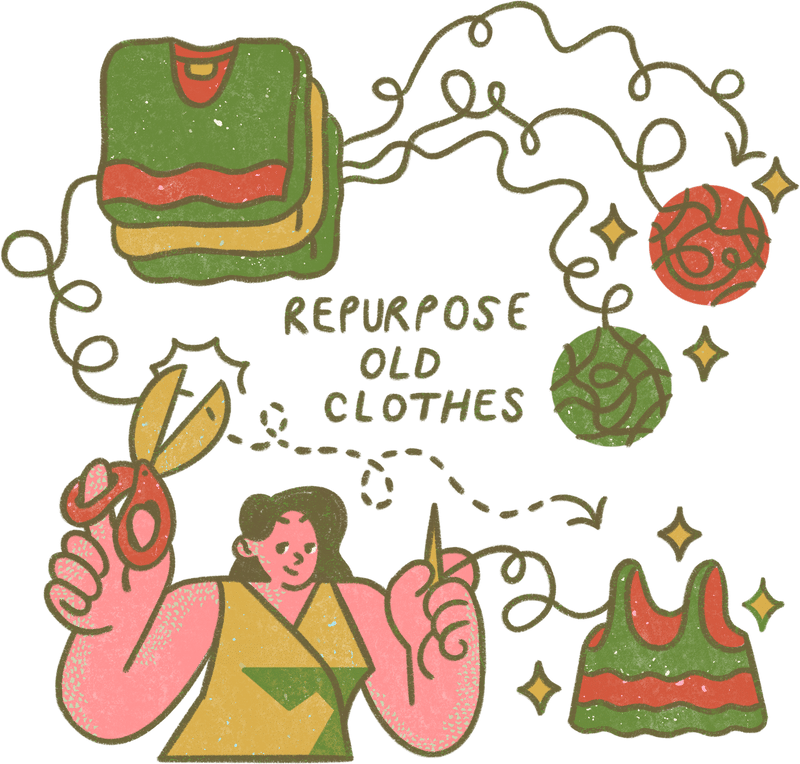
4. Upcycle Creatively: organizations like The Revival in Accra have demonstrated that old jeans, worn shirts, and damaged garments can be transformed into new products from fashion pieces to functional items like farm uniforms.What feels like waste in your hands could be a resource in someone else’s.
Call to Action
Sustainability is not just about where you shop it is about how long you choose to value what you already own. The communities of Mathare (Kenya), Korle-Gonno (Ghana), and the Atacama (Chile) are not abstract examples. They are the direct consequence of a global system in which consumption is cheap and disposal is invisible, that is, to those doing the consuming. Every garment extended in your wardrobe is a small but real act of resistance against that system.
This week’s challenge: Take one item from the back of your wardrobe that you have not worn in months. Try one of the four strategies above: tailor it, layer it, accessorize it, or upcycle it and share a photo of your result on your Instagram, TikTok, Snapchat streaks and Pinterest. Let’s make visible what fast fashion tries to hide: that our clothes still have life in them. Behind every discarded garment lies a story of unequal climate impacts, reminding us that fast fashion’s true cost is paid far beyond the checkout counter.