
When a Country Loses Its Scientists, Nature Dies Too: Brain Drain, Silenced Expertise, and Environmental Collapse in Iran
There are places that do not disappear only because of drought.
They disappeared because warnings were ignored.
Because experts were silenced or more importantly because science lost against politics.
For years, the global conversation around climate justice has mostly focused on carbon emissions, fossil fuels, plastic pollution, and unsustainable industries. These issues matter deeply but there is another dimension of climate injustice that is rarely discussed: What happens when a country loses the very people capable of protecting its environment? What happens when environmental scientists are imprisoned, independent experts are pushed aside, and educated people leave in massive numbers?
We should know that this is not only a political crisis.
It is not only an economic crisis.
It is also a climate justice crisis.
Iran’s ecosystem collapse from the drying of Lake Urmia to the severe physical water scarcity on the Zayandeh Rud river reveals something larger than ecological mismanagement alone. It reveals the devastating connection between brain drain, suppression of expertise, and environmental destruction.
Death of the lake Urmia
Once one of the largest salt lakes in the world, Lake Urmia has lost around 90% of its surface area during its most severe decline periods. Scientists and environmental studies have linked this collapse to a combination of some factors such as: excessive dam construction, unsustainable agricultural expansion, groundwater over-extraction, poor water governance, and prolonged climate stress.
Researchers have repeatedly warned that the crisis was not simply “natural.” It was intensified by human decision-making and systemic mismanagement. The consequences were catastrophic: salt storms damaging farms and human health, collapsing local agriculture,forced migration, biodiversity loss, and growing economic instability. Yet environmental collapse does not begin when a lake dries up or a forest disappears. It begins much earlier, when scientific evidence is ignored, when experts are sidelined, and when institutions stop listening to those raising the alarm.

Zayandeh Rud: The River That Became a Symbol of Silence
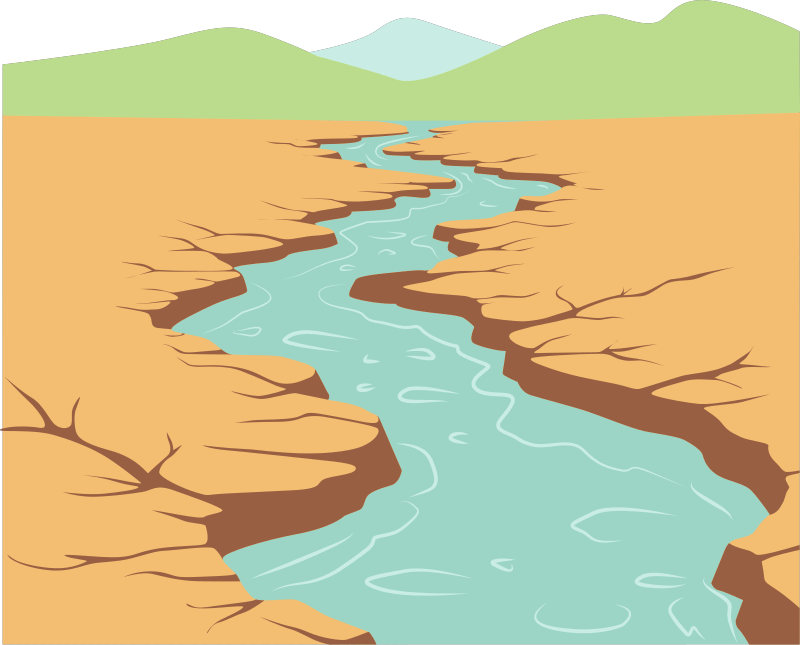
The Zayandeh Rud, long known as the “River of Life” for sustaining communities across central Iran, now runs dry for extended periods, leaving behind a stark reminder of the country’s deepening water crisis. Experts have connected the river’s collapse to: water diversion projects, industrial overconsumption, unsustainable agricultural policies, prolonged drought, and weak long-term environmental planning. Over time, the drying river became more than an environmental issue. It became a symbol of public frustration, governance failure, and ignored scientific warnings.
The Missing Conversation in Climate Justice
Climate justice debates often focus on carbon emissions, renewable energy, and technological solutions. Yet climate resilience depends on something far less visible: human infrastructure. A country’s ability to protect its environment relies not only on natural resources, but also on the scientists, hydrologists, ecologists, environmental advocates, lawyers, researchers, universities, and public institutions capable of producing and applying evidence-based knowledge.
When these human systems are weakened, whether through repression, underinvestment, or the loss of expertise, environmental governance suffers, and ecological decline accelerates. Viewed from this perspective, brain drain is not merely an economic or development challenge; it is also a climate justice issue.
Brain Drain Is Not Only an Economic Tragedy
Iran has experienced decades of large-scale emigration among highly educated people. According to migration studies and international reports, the number of Iranian students abroad increased dramatically between 2003 and 2018, while the Iranian diaspora nearly doubled between 1990 and 2020. Among those leaving are: scientists, doctors, engineers, researchers, and environmental experts. Brain drain is often discussed economically: lost talent, lost innovation, lost productivity but its environmental consequences are rarely discussed. When a country loses independent experts, it also loses: environmental oversight,scientific criticism,sustainable planning capacity,and long-term ecological resilience. Consequently, climate injustice is also created when expertise becomes disposable.
When Environmental Activism Becomes Dangerous
One of the most widely known cases is that of Kavous Seyed-Emami, a respected environmentalist and academician. In 2018, he was arrested by Iranian authorities and later died in detention under circumstances that remain deeply contested. Human rights organizations and international observers raised serious concerns about the lack of transparency and accountability surrounding his death. Seyed-Emami’s case was not isolated. Several other environmental activists and wildlife conservationists were detained, prosecuted, or accused of espionage in connection with their work. The consequences extend far beyond individual cases. Such actions can create a climate of fear around independent environmental research and advocacy. When environmental expertise becomes politically sensitive, scientists may choose to remain silent, leave the country, or find themselves excluded from decision-making processes altogether. The result is a weakening of the very knowledge systems needed to address environmental challenges effectively.
Concluding Remarks
Climate injustice is often understood as the unequal exposure of communities to environmental harm. Yet there is another, less visible dimension. Some societies lose not only water, forests, and biodiversity, but also the freedom, institutional support, and scientific capacity needed to protect them. When experts are silenced, marginalized, or forced to leave, environmental governance weakens. As governance weakens, ecological crises deepen, livelihoods become more precarious, and economic instability and migration increase. These pressures can drive even more experts to leave, creating a vicious cycle that further undermines a society’s ability to respond to environmental challenges.
This is not simply environmental degradation. It is the gradual erosion of a society’s capacity to protect its future.
Lakes do not disappear overnight. Rivers do not suddenly stop flowing. Long before ecosystems collapse, warning signs are often ignored, expertise is sidelined, and institutions lose the ability—or willingness—to listen. First, a country loses its independent experts. Then it loses its capacity for evidence-based decision-making. Eventually, it begins to lose nature itself.
If climate justice is about protecting both people and the planet, then we must recognize a broader truth: silencing scientists is not only a political issue. It is an environmental issue. It is a climate issue. And ultimately, it is a climate justice issue.






Every day is a new beginning