
Why Advocacy Is Not a Choice: A Witness to the Mahsa Amini Revolution
I did not first learn about human rights from textbooks. I learned about them when I felt we didn’t have them. As an Iranian woman, I grew up, and I knew that certain limits were placed on my body, my voice, and my choices long before I could name them. And always they were presented as normal, cultural, even necessary. We were taught how to adapt, how to stay quiet, how to survive, but rarely how to demand. That changed in September 2022.
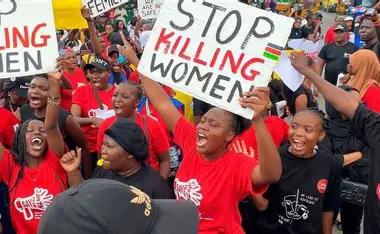
When Mahsa Amini was killed because of hijab, a personal choice for her body, something irreversible happened inside us. Her name became more than a headline; it became a mirror. We saw ourselves in her, our sisters, our friends, our younger selves. And suddenly, silence was no longer an option. This was not only a protest against compulsory hijab. It was a collective refusal to accept a system that treats women’s lives as expendable.
From Fear to Voice
Before the revolution, many of us knew our rights were violated, but knowing is different from acting. Fear is powerful. It isolates. It convinces you that endurance is safer than resistance.
The Mahsa Amini revolution broke that illusion. Women walked into the streets knowing the risks. Students protested inside universities. Girls cut their hair in public.
Men stood beside women, not as saviours, but as allies. For the first time, advocacy was not something distant or abstract; it was embodied in everyday courage. I witnessed how advocacy transforms people. It turns fear into solidarity and Isolation into collective strength.

Image Credits: Aljazeera News
This UGC image posted on Twitter reportedly on October 26, 2022 shows an unveiled woman standing on top of a vehicle as thousands make their way towards Aichi cemetery in Saqqez, Mahsa Amini’s hometown in the western Iranian province of Kurdistan, to mark 40 days since her death, defying heightened security measures

Why Advocacy Matters
Advocacy is not just about shouting slogans. It is about naming injustice, demanding accountability, and educating others so silence is never normalised again.
Without advocacy, violations remain invisible, and abuse becomes routine. Inequality disguises itself as tradition. Advocacy forces systems to confront what they would rather hide. It reminds the world that women’s rights are not cultural preferences but human rights.
Human Rights Education is our form of resistance. One of the most powerful outcomes of the Mahsa Amini movement was awareness. People began asking questions they were never encouraged to ask before: Why does the state control women’s bodies? Who decides what morality looks like? Why are women punished for simply existing freely? Human rights education gave language to our pain. It helped us understand that what we experienced was not personal failure but structural oppression.
Why Advocacy Matters
Education teaches people to recognise injustice before it becomes normalised. It equips individuals with the tools to advocate not only for themselves but also for others who cannot speak safely. Women’s Rights Are Not a Side Issue. What I witnessed made one truth impossible to ignore: When women’s rights are violated, no one is truly free.
A society that controls women’s bodies will eventually control minds, speech, art, and truth itself. Women’s rights are not a “women’s issue.” They are a measure of how much a society values human dignity. The Mahsa Amini revolution showed the world that Iranian women are not passive victims. We are thinkers, leaders, organisers, and educators. We are shaping the future even when the cost is high.


Why I Choose Advocacy
Advocacy is exhausting. It demands emotional labour, resilience, and often personal risk. But after witnessing this revolution, I understand that neutrality is a privilege many cannot afford. I advocate because silence protects oppression, education creates change, and Mahsa’s name deserves more than remembrance – it deserves transformation.
A Call Beyond Borders
The struggle for women’s rights in Iran is not isolated. It is connected to global systems of inequality, control, and exclusion. Advocacy links these struggles together and reminds us that human rights are universal, not conditional on geography, religion, or politics. To witness injustice and remain silent is to participate in it. To learn is to gain responsibility. To advocate is to refuse erasure.
Learning How to Advocate: What YGAF Taught Me
Witnessing injustice taught me why advocacy matters. The YGAF program taught me how to advocate.
Through YGAF, I learned that effective advocacy is not driven only by anger or grief, but also by strategy, empathy, and knowledge. I learned that raising my voice means more than speaking loudly — it means speaking clearly, responsibly, and in a way that creates space for others to listen and learn.
One of the most important lessons I gained was that advocacy begins with education. Understanding human rights frameworks, power structures, and intersectionality helped me see how individual stories, like Mahsa Amini’s, connect to global systems of inequality. YGAF showed me how personal experiences can be transformed into compelling narratives that educate rather than overwhelm, and mobilise rather than divide. I also learned that a strong advocate does not speak for others, but with them. Advocacy rooted in solidarity respects lived experiences, amplifies marginalised voices, and avoids reproducing the very hierarchies it seeks to dismantle. YGAF emphasised ethical storytelling: telling stories with dignity, accuracy, and purpose, something especially crucial when speaking about trauma, resistance, and women’s lives.
Most importantly, YGAF helped me understand that advocacy is not a moment, but a practice. It requires patience, continuous learning, and self-reflection. It taught me how to turn pain into purpose, outrage into action, and hope into sustained commitment.

Today, I carry the lessons of YGAF with me as I continue to advocate for women’s rights and human rights. The revolution I witnessed taught me courage. Education taught me clarity. Advocacy gave me direction. And now, I know that meaningful change happens when voices are not only brave but informed, connected, and intentional.


This is an incredibly powerful and moving piece. Your writing captures not only the urgency of advocacy, but also its moral clarity and human cost. The way you connect lived experience, collective memory, and informed action is both courageous and deeply compelling. This is the kind of voice the world needs more of clear, principled, and grounded in truth. Thank you for turning pain into purpose and fear into collective strength. Truly impactful work.
Thank you very much for your kind comment