Leave No Girl Behind: Refugee Girls and the Quest for SDG 4 Education
By Mara and Milica
Where wars break out, catastrophes and violent events occur, people often have to flee, seeking refuge in other places or countries. This situation seems to have been exacerbated by everlasting and recent wars, leading to a significant increase of forcibly displaced persons and refugees. A mid-year report from the UNHCR in 2025 indicates that there are now more than 30 million refugees under its mandate, which since 2015 almost doubled. Furthermore, 121 million people are protected and/or assisted by the UNHCR. However, this number is likely to be currently increasing due to recent wars.


These individuals, fleeing life-threatening situations in their home regions, seek refuge in other places or countries and are primarily housed in camps where they receive humanitarian assistance in response to the ongoing emergencies. In line with the Sustainable Development Goals (SDGs), released in 2015, host countries are expected to align their policies and actions towards these displaced persons with these goals. However, various studies have highlighted gaps and challenges in many respects regarding the genuine inclusion of refugees (Bob-erg-Fazlic et al., 2024; Linda et al., 2017; IRC, 2019). Although education occupies a significant place in the SDGs and has therefore been granted an exclusive goal (SDG 4), concerns have been raised that refugee’s education has been neglected, indicating a breach of the agenda 2030 pledge “leave no one behind”.
Voices highlight the importance of education, especially for refugee women and girls, which still seems to be an aspiration rather than a reality, despite education being crucial for the development and autonomy of women and girls. Education may also play a crucial role in protecting girls and women against exploitation and violence (GBV). It is essential for the empowerment of refugee girls and women (UNHCR, n.d.).
There is a lack of data on the current situation regarding the education of refugee girls. The latest data is 10 years old, indicating a data gap and suggesting a neglect of these issues. Nevertheless, these data raise significant concerns about refugee access to education: in 2015, only 61% of refugee children attended primary school (no disaggregated data on the proportion of girls), compared to 91% of children worldwide. Only 23% of refugee adolescents were enrolled in secondary education, compared to 84% of adolescents worldwide.
Only 1% of refugee youth, compared to 36% of the world’s youth, access higher education. In 2016, 3.5 million school-age refugees had 0 days of school, whereas school-aged children are expected to attend school for 200 days per year (UNHCR, 2024a). This situation could have worsened since 2015, as the number of refugees and forcibly displaced persons has increased dramatically.
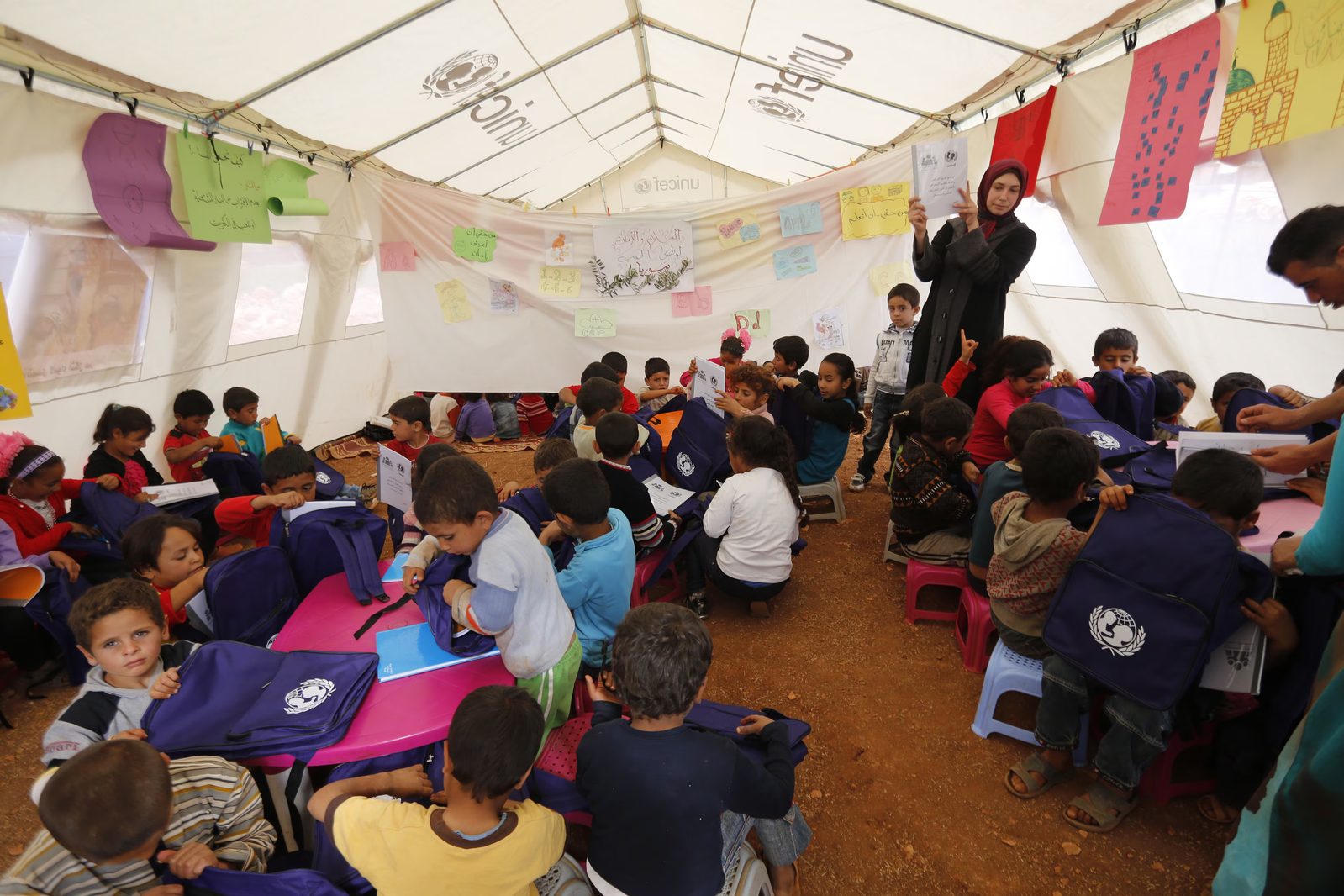
Examining the education of refugees living in camps reveals that refugee education has been neglected, thereby endangering the achievement of SDG 4 which promotes ‘inclusive and equitable quality education and lifelong learning opportunities for all’. However, refugees’ education is ineffective. Evidence from the world’s largest refugee camp, the Dadaab complex in Kenya, bears this out: inexperienced headteachers, a lack of teachers, and inadequate classrooms, textbooks, desks and toilets. Furthermore, schools inside Dadaab refugee complex are not registered due to non-compliance with the minimum requirements of the Ministry of Education. This similar worrying situation can be observed in Jordan’s Zaatari refugee camp, where administrative barriers, a lack of certification or documentation and language barriers are reported, and harassment and violence in and around schools lead some children to refuse schooling and stay home with their families (Wardeh & Marques, 2021).
This situation of refuge is deeply worrying, especially for, girls and women. Recent studies point out that providing education for refugee children still remains a significant challenge, emphasizing the urgent need for action to support these children abandoned, facing an uncertain future (Small, 2020). In this context, girls are more affected by this educational marginalization and face numerous barriers to accessing education (Hattar-Pollara, 2019).
Against this backdrop, it is more than urgent to accelerate actions to promote the education of refugee, especially refugee girls, since the evidence shows that they are being left behind. Therefore, projects such as ÉDUFAM and the DAFI (Albert Einstein German Academic Refugee Initiative) aiming at empowering girls and women through education have to be scaled up to foster the broad integration and inclusion of refugee girls and women (UNHCR, 2024b).